Valentine’s Day as a Data Signal, Not a Marketing Anecdote
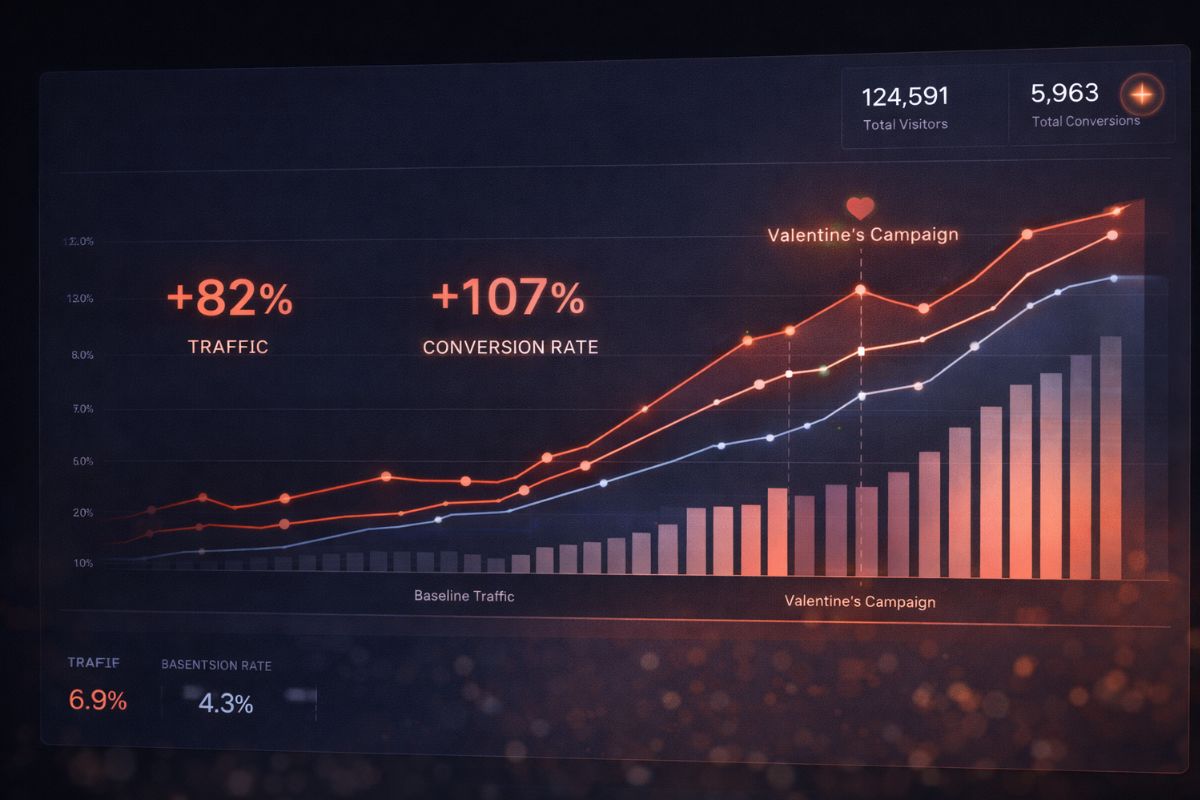
Seasonal retail events often generate anecdotal success stories, but Valentine’s Day 2026 produced something more valuable for analysts and operators alike. It generated clear, comparable performance data that highlights a measurable shift in the digital maturity of small and medium businesses across Canada and the United States.
Rather than isolated wins driven by novelty or temporary tactics, the results point to structural improvements in how SMBs deploy artificial intelligence, integrate social commerce, and protect digital operations under peak demand. Valentine’s Day functioned as a high pressure environment that exposed which businesses had progressed beyond experimentation and into disciplined, system driven execution.
AI Personalization Moves From Uplift to Baseline:
One of the most consistent findings across post event performance data was the normalization of AI driven personalization. What previously delivered incremental uplift is now functioning as baseline capability for digitally mature SMBs.
Businesses using AI powered segmentation and recommendation engines recorded materially higher conversion rates across email, SMS, and on site experiences. More importantly, these gains were achieved without proportional increases in message volume. Relevance, not frequency, emerged as the primary driver.
Behavioral signals such as browsing history, purchase timing, price sensitivity, and delivery urgency were used to dynamically shape offers. This reduced abandonment during critical decision windows and limited the operational strain associated with over promotion.
From a data perspective, AI personalization improved efficiency metrics, including cost per conversion and revenue per contact, rather than simply top line volume.
Valentine’s Day 2026 also provided a clear test of social commerce maturity. Businesses that treated social platforms as transactional systems rather than awareness channels outperformed peers across multiple indicators.
Native checkout, live commerce formats, and shoppable short form video demonstrated lower friction and higher completion rates compared to traditional redirect based ecommerce flows. Average session duration increased, while checkout abandonment declined.
Crucially, these gains held under peak load conditions. SMBs with integrated inventory visibility and real time availability updates avoided overselling and customer dissatisfaction, which historically erode post event retention.
From a measurement standpoint, social commerce proved particularly effective in capturing last minute demand, where speed and simplicity outweigh brand familiarity.
While often excluded from marketing analysis, infrastructure resilience emerged as a meaningful performance variable during Valentine’s Day 2026.
Traffic spikes coincided with increased fraud attempts, phishing activity, and payment processing stress. Businesses with modern hosting environments, secure payment gateways, multifactor authentication, and active monitoring experienced fewer disruptions and higher checkout success rates.
The absence of downtime correlated directly with revenue retention during peak hours. In contrast, businesses that encountered even brief outages suffered disproportionate losses due to the time sensitive nature of Valentine’s purchasing.
Data suggests that baseline cybersecurity and infrastructure investment now directly influences marketing ROI during high demand events.
Localization and Intent Capture Metrics:
Hyperlocal execution produced some of the strongest measurable advantages for SMBs. Search visibility for proximity based queries increased materially for businesses with accurate listings, localized content, and consistent review activity.
Click through rates on local search results exceeded national averages, particularly in the final seventy two hours before Valentine’s Day. Conversion rates were further amplified by the availability of same day fulfillment options, including local delivery and in store pickup.
Localization effectiveness scaled through automation rather than manual intervention. Businesses with synchronized inventory and location data reduced customer friction while maintaining operational accuracy.
Inclusive Segmentation Expands Addressable Demand:
Another notable data trend was the impact of inclusive segmentation strategies. SMBs that expanded Valentine’s offerings beyond traditional romantic gifting captured incremental revenue without diluting core messaging.
AI enabled segmentation ensured that inclusive products were surfaced to appropriate audiences, improving relevance scores and reducing unsubscribe rates. Self care, friendship, and pet oriented products demonstrated strong performance, particularly among repeat customers.
This approach increased average order value and extended customer lifetime value by introducing new entry points into brand relationships.
Measurement Discipline and Decision Velocity:
Digitally mature SMBs distinguished themselves through measurement discipline. Rather than relying on broad attribution models, they focused on high signal indicators tied to revenue quality and retention.
Predictive analytics enabled rapid reallocation of spend toward high performing creatives, channels, and audience segments during the event itself. This reduced waste and improved marginal returns during peak demand.
Importantly, post event analysis fed directly into future planning cycles. Valentine’s Day performance data was used to refine strategies for subsequent seasonal events, reinforcing continuous improvement.
When compared to larger organizations, SMBs demonstrated superior adaptability across several dimensions. Decision velocity, integration depth, and operational alignment allowed smaller firms to respond to real time signals more effectively.
Enterprise organizations often possessed similar tools but lacked the flexibility to deploy them dynamically. Approval structures and centralized control reduced responsiveness during a time sensitive event.
From a data perspective, scale alone did not correlate with performance. Integration and execution quality did.
Implications for SMB Digital Strategy:
The data from Valentine’s Day 2026 supports several strategic conclusions for SMB leaders.
First, AI driven personalization should be treated as operational infrastructure rather than campaign enhancement. Second, social commerce must be integrated into core systems to deliver consistent performance under load. Third, secure digital infrastructure is a prerequisite for sustainable growth, not a separate technical concern.
Finally, localization and inclusive segmentation expand demand when executed with data discipline rather than intuition.
Conclusion:
Valentine’s Day 2026 provided a rare convergence of emotional demand, time sensitivity, and operational stress. The performance data indicates that many SMBs have reached a new level of digital maturity that allows them to compete effectively under these conditions.
Measured gains across personalization efficiency, social commerce conversion, infrastructure stability, and localized execution suggest that this maturity is durable rather than episodic.
For SMBs across Canada and the United States, the findings reinforce a central insight. Digital advantage is no longer defined by access to tools, but by the ability to integrate them into coherent, resilient systems that perform when pressure is highest.







No Comments