OpenAI’s ChatGPT and Anthropic’s Claude continue to serve as the benchmark offerings for conversational artificial intelligence and large language model assistants in July 2026. As two of the most prominent platforms in the generative artificial intelligence sector, both systems drive continuous industry development through competing updates in reasoning, coding, safety protocols, and enterprise integration capabilities.
The Evolution of Leading Assistants
The core competition centers on how each platform processes user inputs, generates complex outputs, and maintains conversational context. ChatGPT, developed and maintained by OpenAI, has historically emphasized broad consumer accessibility, versatile application plugins, and rapid feature deployment. Claude, developed and maintained by Anthropic, has focused heavily on safety alignment, extensive context handling, and nuanced text generation designed for complex professional workflows.
Both systems rely on advanced large language model architectures. However, their underlying development philosophies and safety training methods create distinct user experiences. Enterprise clients and individual developers continuously evaluate these differences when deciding which platform best suits specific computational tasks, ranging from software development to automated document analysis.
Industry Context and Market Dynamics
The rivalry between OpenAI and Anthropic reflects broader economic trends across the technology sector. Substantial capital investments and compute resources fuel ongoing research and development cycles. As organizations increasingly adopt artificial intelligence tools for daily operations, providers face mounting pressure to deliver reliable performance, minimize operational errors, and ensure data privacy.
This competitive pressure has accelerated the pace of software updates for both platforms. Features that once took years to conceptualize and deploy now appear in regular update cycles, reshaping how digital tasks are executed across financial, legal, and educational sectors.
Economic and Public Impact
The widespread adoption of ChatGPT and Claude influences labor markets, software engineering practices, and educational frameworks. Businesses leverage these models to automate repetitive tasks, draft technical documentation, and analyze large datasets. While this integration can improve productivity, it also prompts ongoing discussions regarding workforce adaptation, intellectual property rights, and the reliability of machine generated content.
Organizations must weigh the efficiency gains of utilizing these assistants against the operational costs of subscription models and API usage. As dependency on third party artificial intelligence infrastructure grows, enterprise strategic planning increasingly accounts for vendor reliability and model consistency.
Unresolved Questions and Limitations
Despite significant technical progress, several questions remain regarding the current capabilities of both platforms. Industry observers and researchers continue to debate specific metrics surrounding model performance.
- How do the latest iterations of ChatGPT and Claude compare in multi-modal benchmarks as of July 2026?
- Which platform currently holds the larger market share in enterprise deployments?
Additionally, challenges persist regarding edge cases in automated reasoning, potential hallucinations, and the transparency of proprietary training datasets. Independent audits and benchmark tests offer varying conclusions depending on the specific evaluation criteria applied.
Outlook and Future Direction
The trajectory of both platforms depends heavily on upcoming decisions regarding infrastructure scaling, safety research, and regulatory compliance. As governments worldwide formulate legislative frameworks for artificial intelligence deployment, OpenAI and Anthropic must adapt their operational strategies to meet evolving legal standards.
Market reaction to new feature rollouts will likely dictate the short term priorities of both organizations. Enterprise demand for secure, verifiable, and highly customizable language models will continue to shape development roadmaps throughout the remainder of the year.
Conclusion
The ongoing comparison between ChatGPT and Claude illustrates the rapid maturation of the conversational artificial intelligence sector. By pushing the boundaries of large language model capabilities, OpenAI and Anthropic maintain a central role in defining how humans interact with computational systems in professional and personal environments.




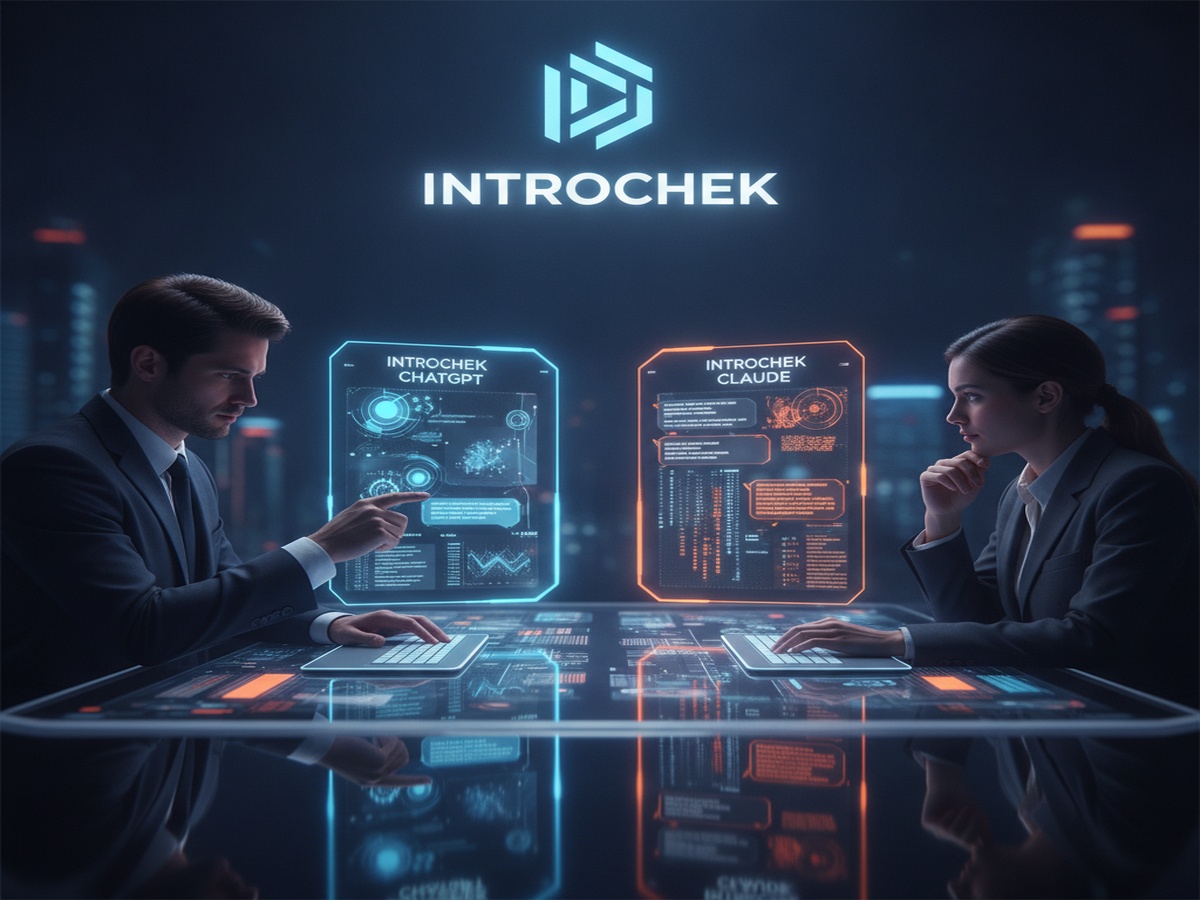 Image via TRIDENT / Introchek



Comments are off for this post.